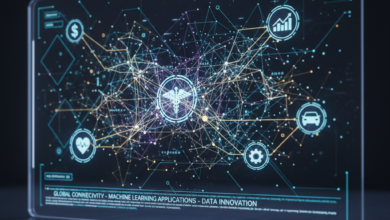
AI in Healthcare: Unlocking a New Era of Precision Diagnostics and Personalized Patient Care

Artificial Intelligence (AI) is no longer a futuristic concept confined to sci-fi movies; it is rapidly becoming an indispensable tool across various industries, with healthcare at the forefront of its transformative potential. From enhancing diagnostic accuracy to personalizing treatment plans, AI is fundamentally reshaping how medical professionals deliver care, promising a future of unprecedented efficiency and improved patient outcomes.
The Dawn of a New Era in Healthcare
The global healthcare landscape faces numerous challenges, including an aging population, increasing chronic diseases, and the ever-present need for more efficient and cost-effective care. AI offers a powerful solution, leveraging vast datasets to identify patterns, make predictions, and automate tasks that were once time-consuming and prone to human error. Its ability to process and analyze information at speeds far beyond human capacity positions it as a critical ally for doctors, researchers, and patients alike.





Revolutionizing Diagnostics with AI
One of AI’s most profound impacts is in the realm of diagnostics. Traditional diagnostic methods, while foundational, can sometimes be subjective or require extensive human labor. AI, particularly machine learning and deep learning algorithms, is changing this paradigm:
- Image Analysis: AI excels at analyzing medical images such as X-rays, MRIs, CT scans, and pathology slides. It can detect subtle anomalies that might be missed by the human eye, improving the early detection of diseases like cancer, diabetic retinopathy, and neurological disorders. This leads to earlier intervention and better prognoses.
- Predictive Analytics: By analyzing a patient’s medical history, genetic data, and lifestyle factors, AI can predict the likelihood of developing certain conditions or responding to specific treatments. This proactive approach allows healthcare providers to intervene before a disease progresses.
- Drug Discovery: AI significantly accelerates the drug discovery process by identifying potential drug candidates, predicting their efficacy and toxicity, and optimizing clinical trial designs. This slashes the time and cost associated with bringing new life-saving medications to market.
Enhancing Patient Care and Personalization
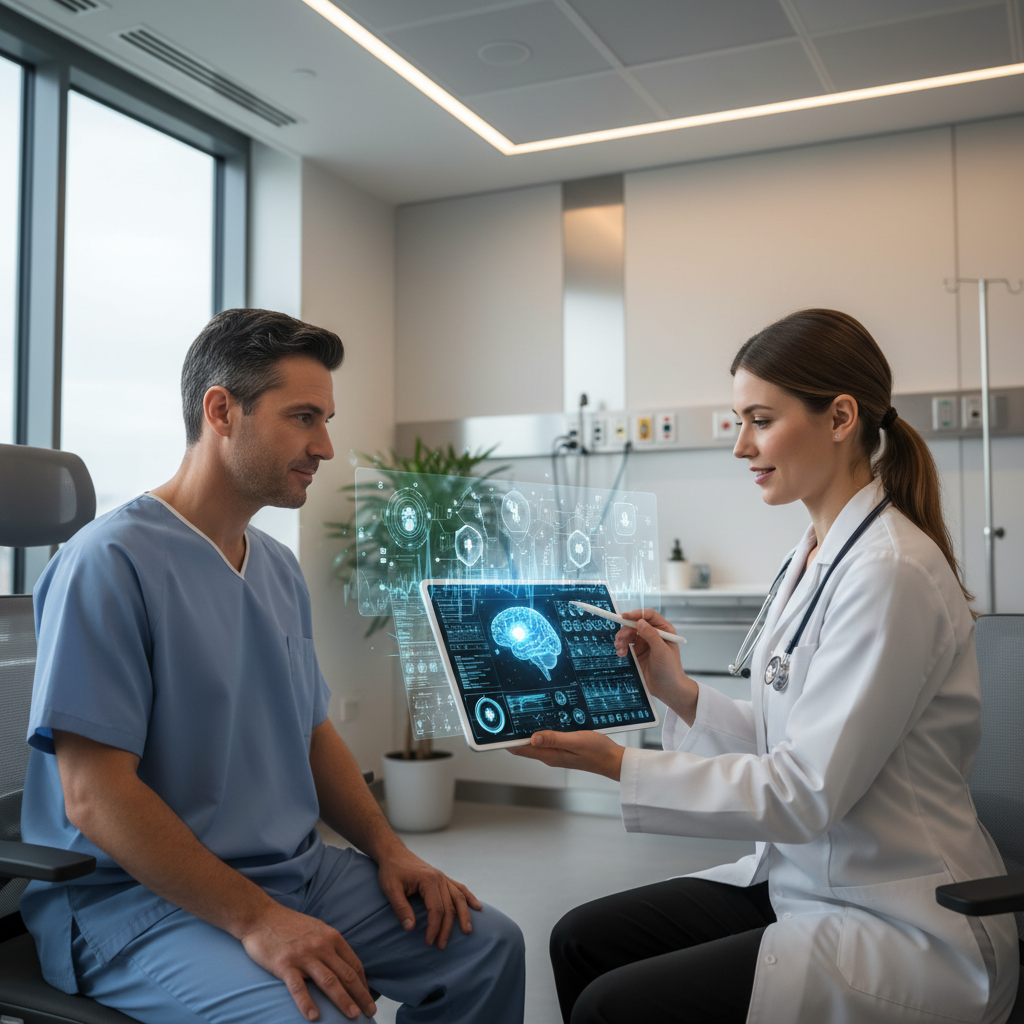
Beyond diagnostics, AI is making significant strides in how patient care is delivered, moving towards more personalized and effective interventions.
Personalized Treatment Plans
AI algorithms can analyze an individual’s unique genetic makeup, lifestyle, and disease profile to recommend highly personalized treatment strategies. This ‘precision medicine’ approach ensures that patients receive therapies most likely to be effective for them, minimizing trial-and-error and improving outcomes, especially in complex areas like oncology.
Virtual Assistants and Telemedicine
AI-powered chatbots and virtual assistants are improving patient engagement by answering common medical questions, scheduling appointments, and providing medication reminders. In telemedicine, AI can help triage patients, analyze symptoms, and even assist in remote monitoring, making healthcare more accessible, especially in underserved areas.
Operational Efficiency
AI optimizes hospital operations, from managing appointment schedules and resource allocation to predicting patient flow and reducing wait times. This translates into more efficient use of hospital staff and resources, ultimately leading to better patient experiences and reduced operational costs.
Challenges and the Future Outlook
While the promise of AI in healthcare is immense, challenges remain. Issues of data privacy and security, the need for robust regulatory frameworks, and the ethical implications of algorithmic decision-making must be addressed responsibly. Furthermore, integrating AI into existing healthcare systems requires significant investment in infrastructure and training for healthcare professionals.
However, the trajectory is clear. As AI technologies mature and become more integrated, they will empower healthcare providers with unparalleled tools to diagnose diseases earlier, deliver more precise and personalized treatments, and ultimately, elevate the standard of patient care for everyone. The journey has just begun, and the future of healthcare, powered by AI, looks brighter than ever.