The EV Revolution: How Technology is Driving Us Towards a Sustainable Future

The automotive industry is undergoing a seismic shift, propelled by the relentless march of technological innovation. At the heart of this transformation lies the electric vehicle (EV) – once a niche concept, now a mainstream reality rapidly redefining sustainable mobility. As nations worldwide grapple with climate change and urban pollution, EVs emerge not just as an alternative, but as a compelling necessity, driven by advancements that make them more efficient, accessible, and desirable than ever before.
The Engine of Change: Breakthrough Battery Technology
Central to the EV revolution is the exponential progress in battery technology. For decades, range anxiety and high costs were significant barriers. However, lithium-ion batteries have seen dramatic improvements in energy density, allowing for longer ranges and faster charging times. This evolution has made multi-hundred-mile ranges commonplace, putting EVs on par with internal combustion engine (ICE) vehicles for most daily commutes and even longer journeys. The horizon promises even more with solid-state batteries, which boast even higher energy density, faster charging, enhanced safety, and potentially lower manufacturing costs. These innovations are dismantling the very foundations of range anxiety.





Beyond the Battery: Smart Motors and Charging Solutions
While batteries power the journey, highly efficient electric motors translate that power into motion with minimal energy loss. Modern EV motors are marvels of engineering, delivering instant torque, smooth acceleration, and a quiet ride that redefines the driving experience. Coupled with regenerative braking systems that convert kinetic energy back into electricity, these motors contribute significantly to overall efficiency.
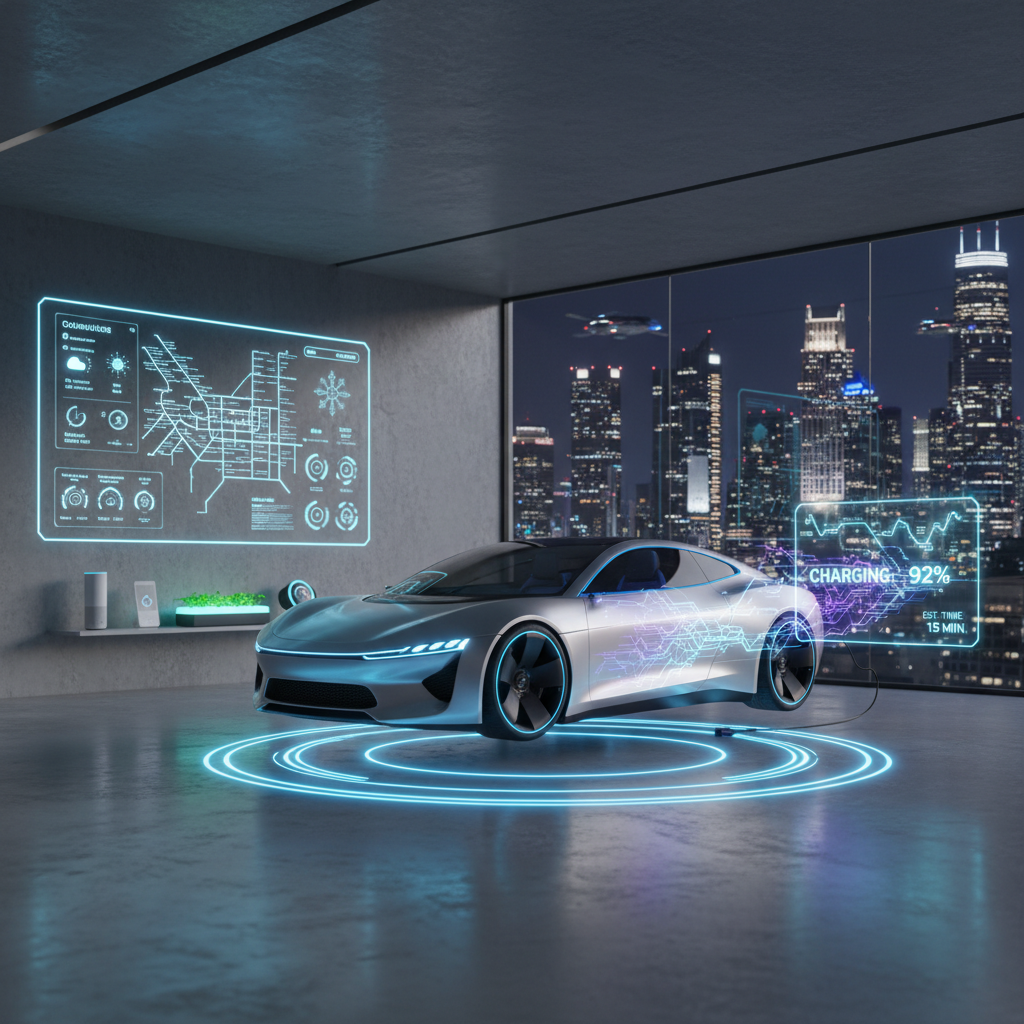
Simultaneously, the expansion of charging infrastructure is pivotal. Fast-charging stations are becoming ubiquitous, capable of replenishing a significant portion of an EV battery in minutes rather than hours. Furthermore, advancements in wireless charging technology offer the tantalizing prospect of charging an EV simply by parking it over a designated pad, hinting at a future where charging is seamless and invisible.
The Software Revolution: AI, Connectivity, and Autonomous Driving
Today’s EVs are more than just cars; they are sophisticated, connected computers on wheels. Advanced software algorithms manage everything from battery health and energy consumption to infotainment and climate control, optimizing performance and extending range. Artificial intelligence (AI) plays a crucial role in predicting range based on driving patterns and terrain, and in managing charging cycles to prolong battery life. Over-the-air (OTA) updates keep vehicles current with the latest features and security enhancements, much like a smartphone.
Moreover, the integration of advanced driver-assistance systems (ADAS) and the nascent stages of autonomous driving technology are making EVs safer and more convenient. Features like adaptive cruise control, lane-keeping assist, and automated parking are becoming standard, paving the way for a future where cars navigate themselves, further enhancing efficiency and reducing human error.
Paving the Way for a Sustainable Future
The most profound impact of the EV revolution lies in its potential to foster truly sustainable mobility. By eliminating tailpipe emissions, EVs directly contribute to cleaner air in urban centers, reducing respiratory illnesses and improving public health. A transition to renewable energy sources for electricity generation further amplifies these benefits, creating a truly zero-emission transportation ecosystem from production to propulsion.
Reduced reliance on fossil fuels also has significant geopolitical and economic implications, enhancing energy independence and stabilizing fuel costs for consumers. As battery recycling technologies mature and manufacturing processes become greener, the lifecycle environmental footprint of EVs will continue to shrink, cementing their role as the cornerstone of a sustainable future.
Overcoming Challenges and Accelerating Adoption
While the path forward is promising, challenges such as initial purchase cost, mineral sourcing for batteries, and ensuring robust charging infrastructure for all still exist. However, continuous innovation, government incentives, and increasing consumer demand are rapidly addressing these hurdles. Economies of scale are driving down costs, new battery chemistries are exploring alternatives to rare earth minerals, and public-private partnerships are accelerating infrastructure deployment.
Conclusion: The Unstoppable March of Electric Mobility
The rise of electric vehicles is not merely a trend; it is a fundamental shift in how we conceive and execute personal transportation. Fueled by relentless technological advancements, EVs are delivering on the promise of cleaner, smarter, and more sustainable mobility. As these technologies mature and integrate further into our daily lives, the future of transportation looks undeniably electric, forging a path towards a healthier planet and a more efficient world.